Prince of Kreative
Multi-Purpose Canine. Tactical Working Dog. Athlete.
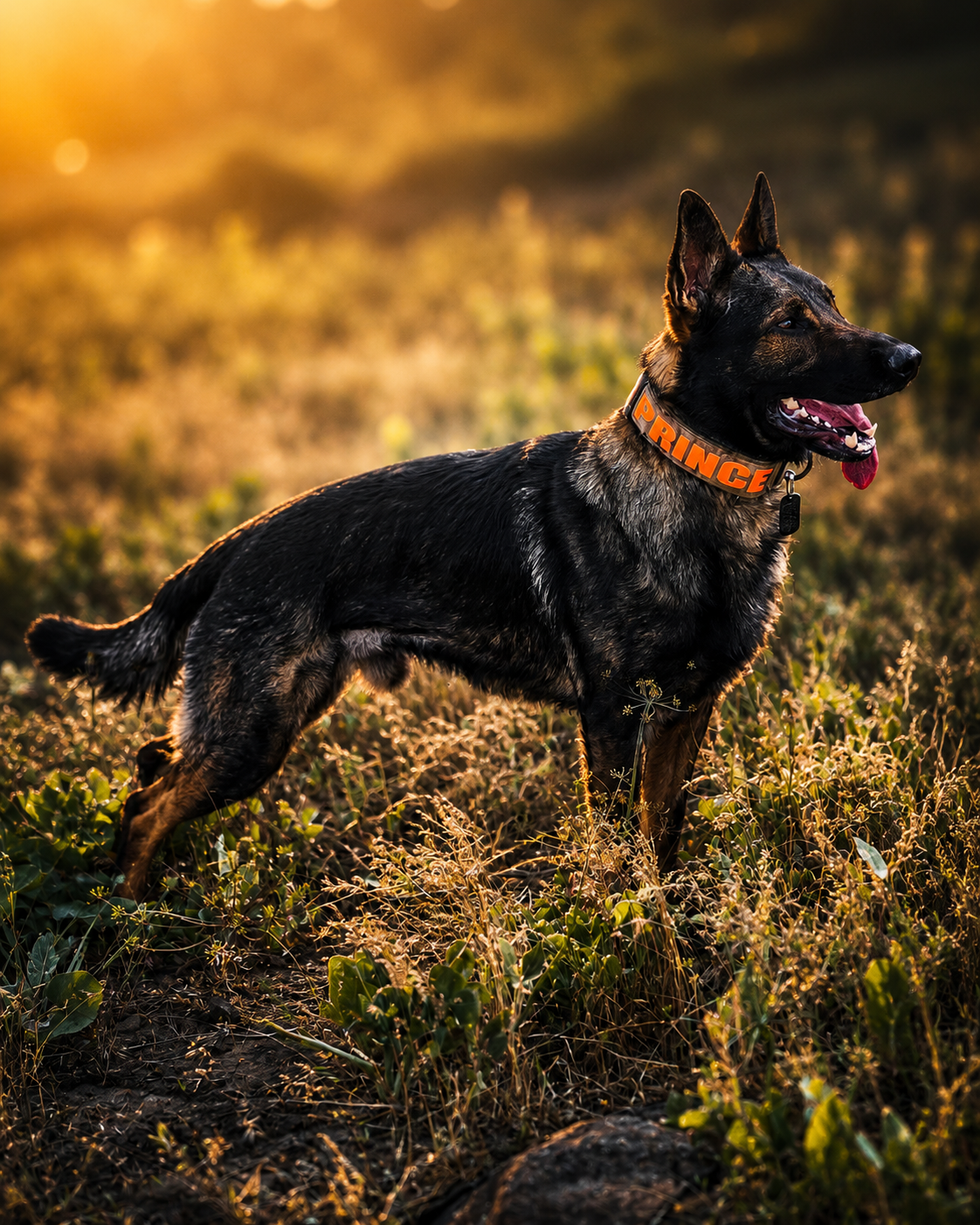
Prince brings together a substantial working-line German Shepherd pedigree, multidisciplinary working skills, and earned dock-diving achievement.
His working background spans high-threat protective services, patrol, high-risk tactical tracking, tactical explosives detection, specialized search, and related tactical canine skills. His Dock Senior title adds a separate record of athletic performance.
Prince of kreative
Registered name: Prince of Kreative
Call name: Prince
Breed: German Shepherd Dog
Sex: Male
Color: Dark sable
Date of birth: June 19, 2023
Working designations: Multi-Purpose Canine (MPC); Tactical Working Dog (TWD)
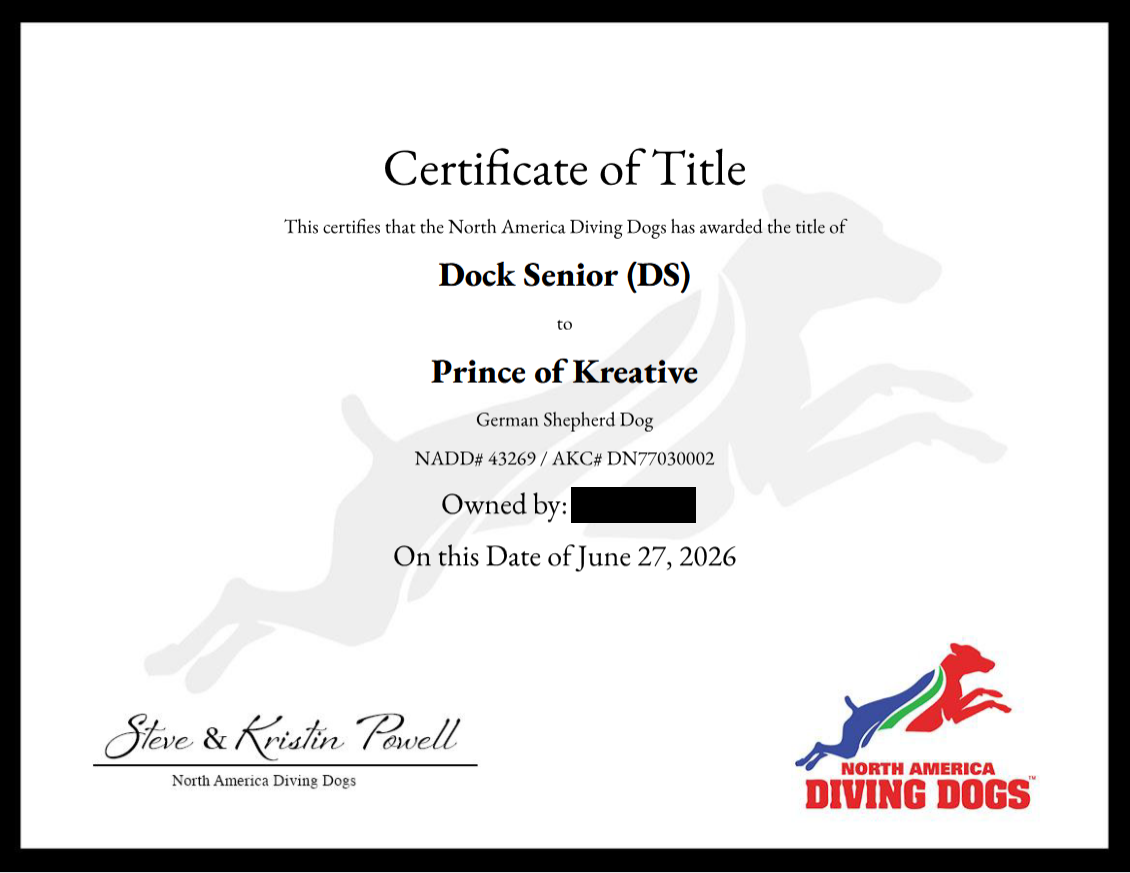
Sport title: Dock Senior — DS
Sire: Eddie from Tasmanian Devils
Dam: Jahna of Kreative
Program status: Current Kriegerhund K9 program dog
Prince’s Working Background
a force multiplyer with Purpose Across Multiple Disciplines
Prince’s work reflects the breadth expected of a Multi-Purpose Canine: protection-related skills, tracking, detection, specialized search, and coordinated work with his handler.
The following disciplines describe his working background. Formal certifications, where applicable, are identified separately with their issuing organization, date, and assessed scope.
High-Risk Tactical Tracking
Prince’s high-risk tactical tracking work centers on following a human trail while accomanied by a tactical team and remaining responsive to his handler within a coordinated operational environment. The discipline brings together scent work, physical endurance, environmental confidence, control, tactical movement, and live fire work. Its purpose is to develop a dog-and-handler team capable of working with a tactical team through a high-risk tracking problem.
Within Prince’s multidisciplinary development, this work connects independent problem-solving with handler coordination. The dog contributes access to scent information; the handler contributes judgment, pacing, communication, and responsibility for the team’s decisions. Progress is evaluated through the quality of that partnership as well as the outcome of the exercise or operation.
Documented examples provide the context needed to understand his performance: the tracking objective, trail age, distance, terrain, environmental conditions, assistance provided, and result. Those details make a demonstration meaningful and allow individual exercises to be understood within his broader development.
Tactical Explosives Detection
Explosives-detection skills form part of Prince’s development as a Multi-Purpose Canine. This discipline combines trained odor recognition, purposeful searching, and a recognizable response with the handler’s ability to interpret behavior and manage the exercise. The objective is a clear, controlled working process in which the dog’s response can be evaluated against a known training problem.
Odor recognition and search performance are related but distinct skills. Recognizing a trained odor is one component; locating its source within a search environment introduces additional demands. Odor availability, airflow, distractions, and the physical setting can influence how the dog encounters and investigates scent. Effective assessment therefore considers both the search process and the final response.
The tactical dimension concerns how detection work connects with handler direction, environmental awareness, and tactical coordinated movement. Prince’s development brings these elements together while retaining a clearly defined detection objective. Search motivation, responsiveness, and clarity of behavior remain central considerations.
Training descriptions identify the odor aids used, the exercise conditions, and the behaviors observed. Demonstrations are presented within that specific context to distinguish odor-aid training, assessed performance, and any separately documented certification.
Specialized Search
Prince’s specialized search work extends beyond a single exercise format, connecting his search motivation and problem-solving ability with a clearly defined objective. Each task establishes what he is being asked to locate, the environment in which he is working, and the behavior expected when the objective is reached.
Different search problems place different demands on a working dog. A dog may need to investigate independently, remain engaged when the answer is not immediately available, or respond to handler direction when access and coverage require coordination. The value of the work lies in purposeful investigation and readable behavior throughout the exercise.
For the handler, specialized search requires attention to both the dog and the environment. Changes in pace, orientation, breathing, and interest can provide information, but those observations must be interpreted in context. A change in behavior is part of the search process; its meaning depends on the task and the evidence available.
Prince’s search development is presented through specific examples rather than a single broad claim. Each documented demonstration identifies the search objective, target or training aid, setting, degree of handler assistance, and outcome. This approach shows what he demonstrated and gives readers a practical basis for understanding the scope of his work.
Tactical Working-Dog Skills
Prince’s broader tactical working-dog development connects individual capabilities with handler direction and coordinated performance to accomplish various objectives as part of a tactical team. Tracking, detection, search, high-threat protective services and other tactical work have their own objectives. Integrating them requires clear communication, appropriate task selection, and the ability to move between different working demands without losing control or clarity.
The foundation is a productive balance between initiative and responsiveness. A working dog needs sufficient independence to investigate and solve problems, together with the ability to respond when the handler redirects, pauses, or ends the task. The handler must recognize when to allow the dog to work and when intervention is necessary.
Environmental confidence and physical readiness support that relationship. Changing surroundings, distractions, and unfamiliar demands can affect performance, making progressive exposure and recovery important parts of development. The objective is composed, purposeful work that remains understandable and manageable for the handler.
Prince’s tactical work is considered through the performance of the team as a whole: engagement with the assigned task, response to direction, transitions between activities, and the ability to settle after work. Documented exercises explain the skills combined, conditions introduced, assistance required, and behaviors demonstrated. Together, these examples show how his individual abilities contribute to his development as a Multi-Purpose Canine.
A Working Pedigree With Substance
Eddie from Tasmanian Devils, igp 3 × Jahna of Kreative
Prince’s pedigree combines Czech working-line ancestry going back to the czech border patrol breeding program through his sire with notable German working and competition ancestry through his dam.
These connections explain the background of the pairing. Prince’s own skills, health, and development establish his individual record.
Sire: Eddie from Tasmanian Devils, igp 3
Eddie’s supplied profile records an IGP3 title and Czech working-line ancestry through dogs including Allegro ze Zděného mlýna and Wessie z Kraje Karla IV.
The displayed pedigree includes lines associated with ze Stříbrného kamene, z Klídkova dvora, and other working kennels. This provides a specific foundation for .
Dam: Jahna of Kreative
Jahna is a daughter of Vello von der Prinzenbrücke and Yadira of Kreative.
Her pedigree connects Prince to Brisco vom Patriot through Vello, and to the legendary Javir vom Talka Marda through Yadira and Enzo vom Bonauer Wald.
Brisco vom Patriot
Brisco appears as Prince’s maternal great-grandfather:
Prince → Jahna of Kreative → Vello von der Prinzenbrücke → Brisco vom Patriot
Brisco has an IPO3 and VPG3.
Javir vom Talka Marda
Javir appears as Prince’s maternal great-great-grandfather:
Prince → Jahna of Kreative → Yadira of Kreative → Enzo vom Bonauer Wald → Javir vom Talka Marda
Javir was the 2008 German Bundessiegerprüfung champion and a three-time WUSV World Championship competitor, with a third-place finish in 2008 and fourth place in 2009.
What This Heritage Means
Prince comes from generations selected and developed for demanding working and sporting purposes.
That heritage provides context for his potential. His individual record shows how that potential has been developed.
[View Eddie’s Pedigree]
[View Jahna’s Pedigree]
Athletic Performance
Dock Senior — DS
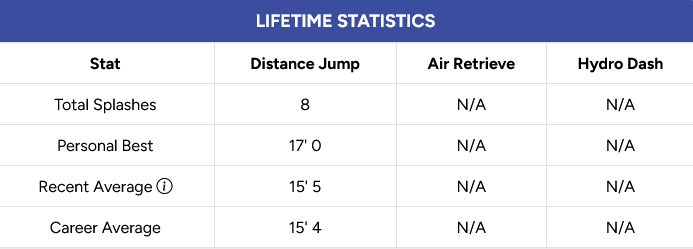
Prince’s dock-diving achievements provide a separate record of athletic performance alongside his working background.
Earned title: Dock Senior — DS
Dock-diving organization: North America Diving Dogs — NADD
Recorded personal best: 17 feet
prince earned his ds title in his first competition. His DS title recognizes achievement within dock diving. His tactical and multidisciplinary working skills are documented separately.
Health and Documentation
Prince is DM, hip & elbow dysplasia free for 32 generations. ofa examonation certifications, xray’s, dna testing & profile information coming soon.
Published reports identify the examination or test performed, the date, and the reported result. His parents’ health information provides family context and is presented separately from his own findings.
Available identification and supporting records can be reviewed below.
Prince and The Kriegerhund Way
Prince’s profile brings together the elements that matter in evaluating a working dog: intended purpose, individual development, health information, handler partnership, and documented performance.
His pedigree explains his background. His training records and achievements explain his own work.
THE KRIEGERHUND WAY provides the framework connecting those elements—and the reasons to progress, reassess, or change direction.
Discuss Your Working-Dog Requirements
Whether you represent a military, law enforcement, or government organization—or are exploring a select private protection placement—begin with the intended role, environment, and handler.
Tell us what the dog must do and the circumstances in which it must perform.